Golbal Sleep Time Optimizer
Your Personal Sleep Calculator
Sleep Time Optimizer
Auto-detects timezone. Use either wake time or bedtime. Recommendations use age-based guidelines (CDC/AASM/NSF) with safe adjustments for BMI & health flags.
Your Personal Sleep Calculator
How to read results — short
• Guideline-based = total sleep hours recommended for your age group (based on CDC/AASM/NSF medians), adjusted for BMI & conditions.
• Sleep cycles = ~90 minutes each. Completing full cycles (4–6 cycles = 6–9 hours) helps you wake up feeling refreshed. The calculator shows both guideline-based total and cycle-based alternatives so you can choose what fits your schedule.
About Sleep Time Optimizer
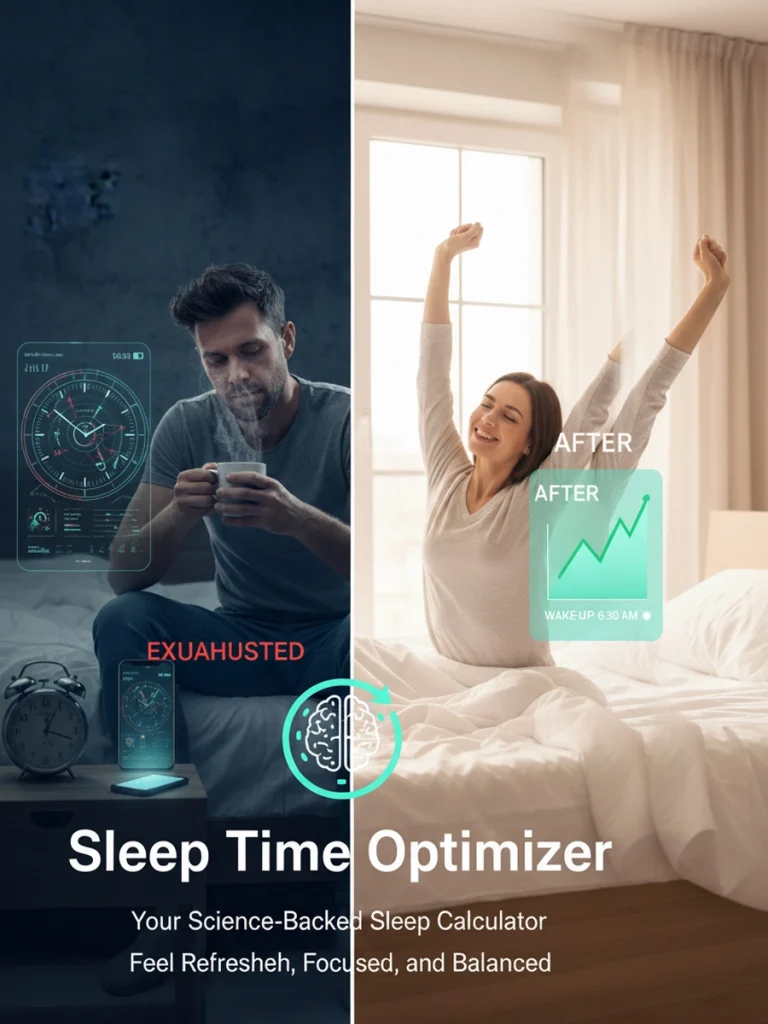
Sleep Time Optimizer is your science-backed sleep calculator designed to tell you exactly when to sleep and when to wake up for maximum energy.
A peaceful routine with the right sleep cycle and sleep duration isn’t just good practice – it’s the foundation of a healthier, more productive life.
Our sleep time calculator studies your sleep patterns and gives personalized, easy-to-follow recommendations that help you feel refreshed, focused, and balanced. Best sleep time depends on when you go to bed and wake up to feel more energized each day. Whether you’re trying to optimize your bedtime or find the ideal wake-up time, our Sleep Cycle Calculator guides you toward smarter sleep habits every single night.
Why Sleep Time Optimizer?
Sleep Time Optimizer helps you discover the right time to sleep and wake up using clear, science-backed guidance.
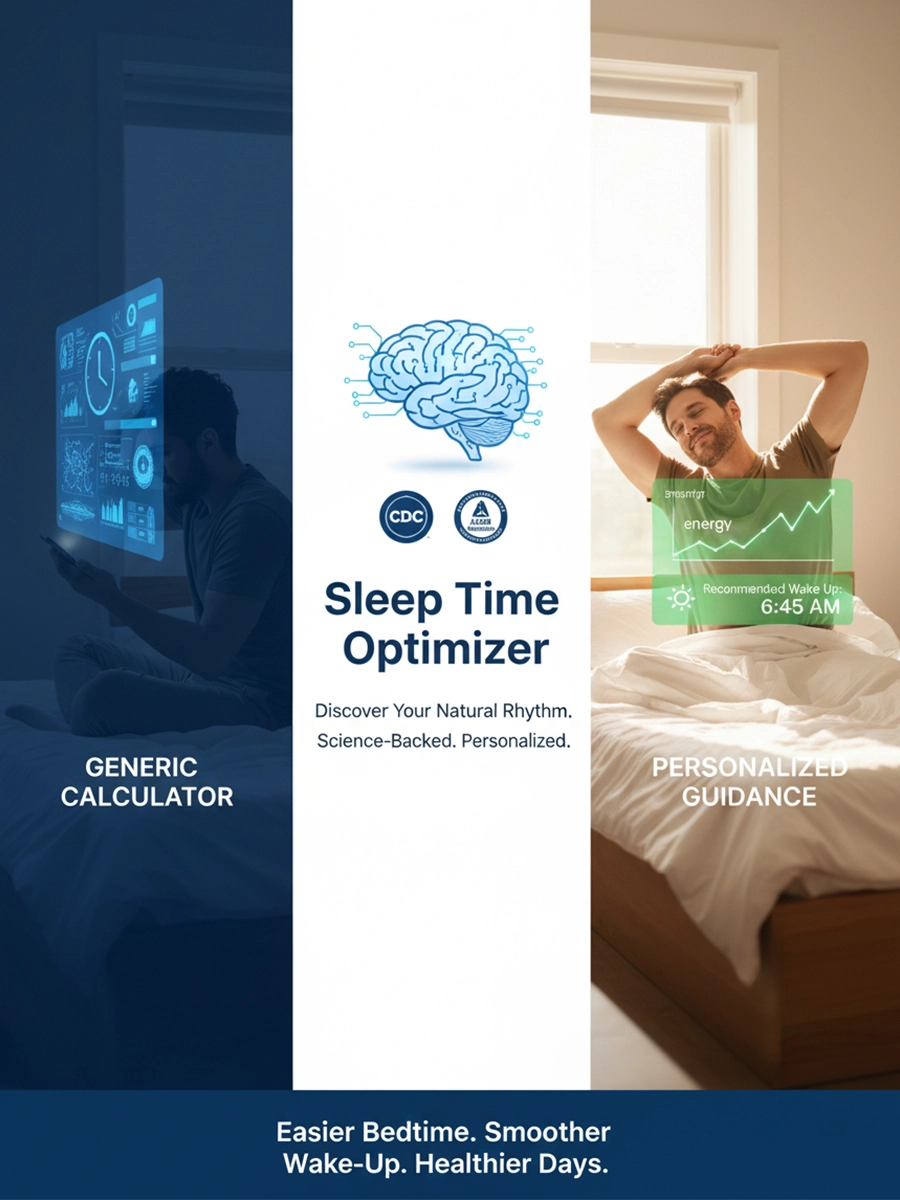
Built on CDC, AASM, and National Sleep Foundation sleep duration medians, it gives personalized timing suggestions that fit your natural rhythm.
Instead of generic hours like many basic sleep calculators, it adjusts recommendations around your lifestyle, patterns, and real sleep needs. The result? An easier bedtime, a smoother wake-up, and a more consistent sleep cycle that supports better energy and healthier days.
FAQs
What does a Sleep Time Optimizer do?
A Sleep Time Optimizer calculates the ideal time for you to fall asleep or wake up based on natural sleep cycles. Instead of guessing, it considers your preferred wake time, desired sleep duration, and body rhythm to create a personalized sleep schedule. The result? Faster sleep onset, deeper REM and deep sleep cycles, and consistent daily energy levels.
How accurate is a Sleep Time Optimizer?
A quality Sleep Time Optimizer works with scientifically proven 90-minute sleep cycles and CDC/AASM recommended sleep durations. It predicts when each cycle ends so you wake up refreshed and alert. While it’s not a medical diagnostic tool, it is highly reliable for everyday sleep timing and routine planning.
Why use a Sleep Time Optimizer instead of sleep tracking apps?
Unlike sleep tracking apps, Sleep Time Optimizer is instant and hassle-free. No syncing, no wearable devices, no profile setups – just input your wake time and get your optimal bedtime. It’s fast, practical, and designed to maximize your energy and alertness without any extra tools.
How many sleep cycles do I need per night?
Most adults need 4-6 sleep cycles per night, which translates to roughly 6-9 hours of sleep. Your exact number depends on age, lifestyle, and stress levels. Too few cycles leave you groggy; too many can cause oversleeping side effects. Sleep Time Optimizer recommends the safest and most efficient number of cycles tailored to your rhythm for peak performance.
Is it better to sleep early or just complete the right number of hours?
Both sleep timing and quality are crucial. Missing the 10 PM-2 AM deep sleep window reduces body recovery, even if you sleep 8-9 hours. Sleep Time Optimizer ensures you get the right hours and the right timing, balancing your sleep schedule for maximum energy, mental clarity, and overall health.
Is Sleep Time Optimizer a substitute for professional medical advice?
No. Sleep Time Optimizer provides general guidance only. It is not a replacement for professional medical advice. If you have persistent sleep problems, consult a healthcare provider for proper diagnosis and treatment.